Tuesday, November 10, 2015

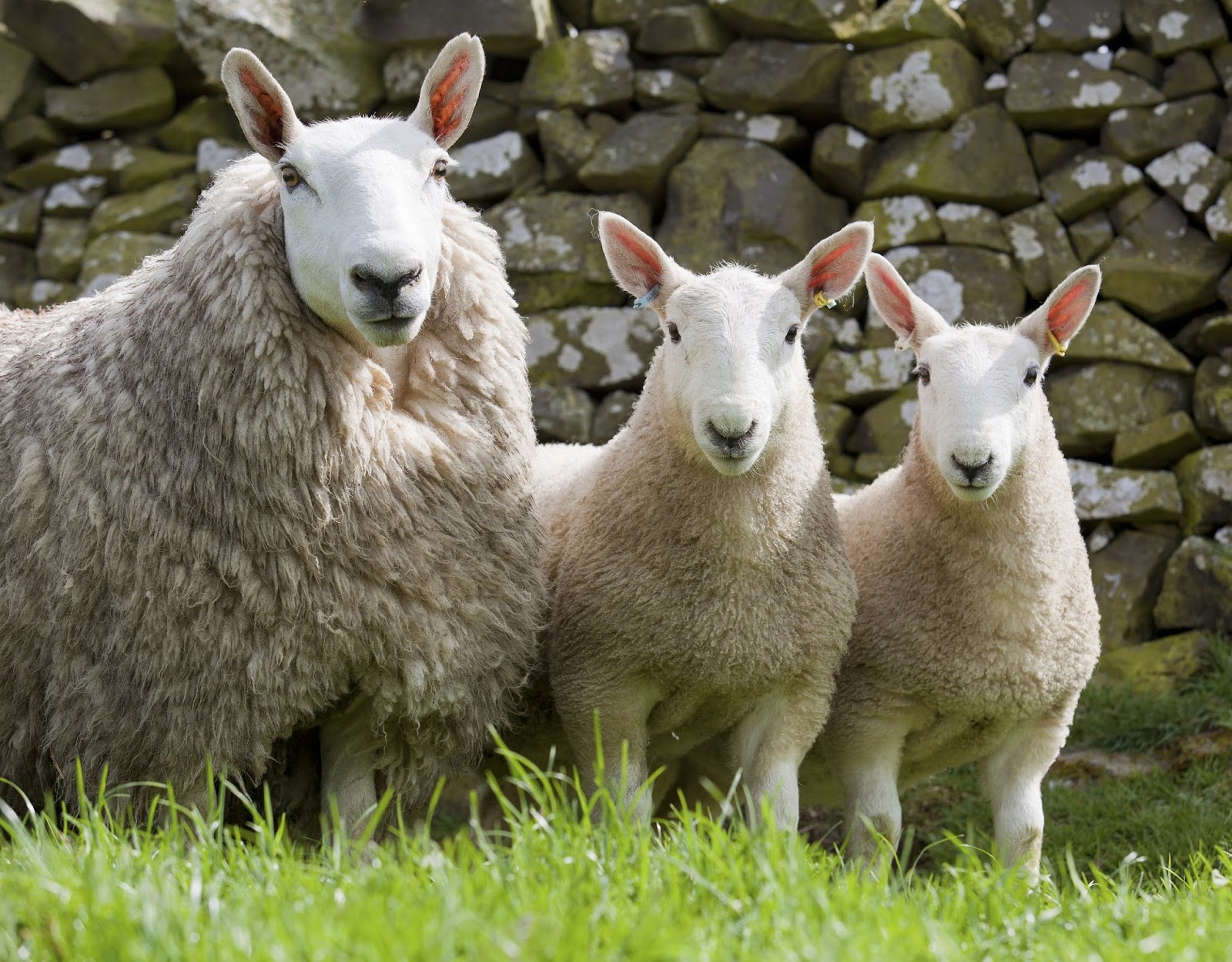
Breed Book- Romney

Romney 


In North America the average micron count is 29-36.
 The Romney sheep have a defined lock structure with a staple length that can range from 4-6”.


Woolen
Prep- Washed, rinsed twice. Teased then carded. Spun woolen using a long draw.

During the teasing process I broke off the tips of the fiber with my hands. They were really damaged and broke off easily. I then carded the fiber three times and used a dowel to assist in making rolags. The fiber did drafted well, however, when while spinning the single ply it wasn't drafting as even as I would have liked. After the plying process, I was very surprised that it evened out and was happy with the end result. For this yarn, I used very little ply twist because I wanted the yarn to be airy and filled out. 

Suggested end use: I believe the woolen finished yarn has a much softer hand then the worsted. That being said, it could be used next to the skin. I would make an outwear garment out of this yarn because insulating qualities. It would also make an amazing blanket.


Worsted
Prep- Dip washed, rinsed twice. Cut off tips due to “Canary stains”. Teased then combed. Spun worsted using a short forward draw. 

The fiber was very clean but the tips had bad canary stains that had to be cut off. The fiber had some static while I was drafting it off of the combs into a sliver but it drafted really easily and evenly. I spun the fiber worsted using a short forward draw from butt to tip. After plying I did not think there was enough ply twist so I ran it through again. I think Romney is a perfect fiber to spin worsted. It also has a lot of luster to it. 

Suggested end use: I don't think that I would use this yarn for anything next to the skin but it would look lovely in a woven or knit shawl. It would also work great in a woven outwear piece or a home good. 

Tuesday, August 18, 2015

New chapter

I have always love to share the things I love and I'm passionate about with others. 

While in high school I was very lost. Like many students, I didn't know what I wanted to do and felt major pressure from society to have my life figured out. Now in my late 20s I still struggle with the same question. I feel now more then ever I should have my life figured out by now. That was the plan, right? Am I on the right track? What am I meant to do in this world? There has to be a reason I was put on this earth, what it is? The questions never seems to settle. 

To bring you back to my high school times, I found fashion. When I did it seemed my whole world changed. I was getting better grades at school, I was able to express myself through design and I found myself and what I was truly passionate about. 

My path has taken me on all different roads but one thing has stayed true; I love to create and express myself through the art of fashion. 

So after relentless questioning and self doubt an opportunity of a life time landed on my door step and I had to jump in head first. I'm excited to announce that my path is now leading me to The High School of Fashion Industries of NYC where I will be about to share my love and passion with the next generation. I am going to be a high school Fashion Teacher! I was not looking for it but at the same time I was. I hope that I am able to inspire and be inspired. I hope I am able to teach and learn. Most of all I hope I can make a difference in someone's life like I had in high school.  

We never know where our life journey will take us and some times we may question everything but if you keep faith, you will end up just where you need to be.


Tuesday, August 11, 2015

Oatmeal, banana, blueberry, chocolate chip, honey, whole wheat muffins.

These muffins are so good and not that bad for you either! I made them using our honey as the sweetener and local farmers market blueberries which made them even better!


Recipe
1 1/2 cups of whole wheat flour
1 cup oatmeal
2 tsp. baking powder
1 tsp. baking soda
1/2 tsp. salt
1 egg
1/2 cup of low fat milk
1/2 cup of honey (dark honey if you can find it)
1/3 cup oil
2/3 cup mashed banana
1/2 cup blueberries
1/3 cup chocolate chips

Preheat oven to 400 degrees. In a bowl stir together oatmeal, flour, baking powder, baking soda and salt. In another bowl mix together egg, milk, oil, honey and banana on a low speed. Add dry mixture slowly until ingredients are fully mixed. Gently turn in blueberries and chocolate chips. Fill greased muffin pan until they are 2/3 full. Bake of 15 minutes or until they are golden brown on the top.


They are really tasty when they are still warm because the chocolate chips are all melted! 

Enjoy!

Breed Book- Polwarth

Polwarth 

Photo credit :http://bib.ge/sheep/open.php?id=553

The staple length average is 4-6” with a micron count that averages from 23-25 microns. 
The Polwarth fleece is very dense and usually weights 9-13 lbs. 
The fleece also looses about 25% of it’s weight when washed, which is high for a fine wool.


Woolen
Prep- Dip washed, rinsed twice. Teased then carded 3x into rolags. Spun woolen using a long draw.

I felt the fiber was a little too sticky which made it difficult to draft, however, it did help the rolags to hold together nicely. I think next time I would scour the fiber so that there would be less lanolin making it easier to draft. The difficulty of the long draw was also due to the length of the fiber. There were are lot of lumpy, bumpy parts. I also found that there were a lot of 2nd cuts and breaks that I tried to pick out with my hands as I was spinning. Next time, I would apply less ply twist in hopes that the fiber would bloom more. I did prefer the worsted yarn over the woolen.

Suggested end use: The fiber is very soft which leads me to recommend something knitted and close to the skin. For example, a hat, cowl or even a sweater.


Worsted
Prep- Dip washed, rinsed twice. Teased then combed. Spun worsted using a  forward draw. 

I really enjoyed working with this fiber. During the combing process the tips did break off. I felt the fiber was a little too sticky which made it difficult to pull off into a sliver. However, the end resulting yarn look amazing. The stickiness also made it difficult to draft. I spun the fiber butt to tip. I wound up having to pick out some missed broken tips and slubs during the spinning process. My drafting zone was larger then usual; 4-5”.

Suggested end use: I love the end yarn. I think it would make great socks or a sweater this is because the yarn is soft with great bounce. 

Sunday, August 2, 2015

Breed Book- North Country Cheviot

North Country Cheviot 

Photo credit http://www.nc-cheviot.co.uk/index.php/the-versatile-breed

Their fleece ranges from 5-10 pounds with a 50-65 percent yield from washing. 
The fiber has an average staple length of 3 1/2”- 6”.
 The average micron count is 27-30 for adults. 


Woolen
Prep-Soaked and then scoured, rinsed twice. Teased then carded. Spun woolen using a long draw.

I removed some straw and vegetable matter while I was teasing the fiber. There was still some vegetable matter present during and after the spinning process. Next time, I would spend more time removing the VM before carding to ensure a cleaner resulting yarn. The fiber was easier to card and held up in rolags very well. I felt it was easily drafted using the long draw method. The finished yarn did have a lot of bounce to it. Next time, I would apply less ply twist to allow the fibers to open up more. 

Suggested end use: I think socks are the best end use for this yarn. It has a great bounce and recovery but is not soft enough for something like a sweater.


Worsted
Prep- Dip washed, rinsed twice. Teased then combed. Spun worsted using a short forward draw from butt to tip.

There was some vegetable matter present during the prep process but a lot came out during combing. The fiber was very clean after I had combed it and  it also drafted really well. I decided to spin it very thin because I think the best end use would be a sock yarn. I really enjoyed making this yarn and was happy with the end result. The finished yarn has a lot of bounce and recovery and it spun very evenly. 

Suggested end use: I think socks are the best end use for this yarn. It has a great bounce but I don't think its soft enough for something like a sweater. I would probably do a 3-ply if I was going to be making socks out of it to help with strength and wear.

Sunday, July 26, 2015

Breed Book- Merino

Merino 

Photo credit https://milligansganderhillfarm.wordpress.com/2013/06/06/merino-sheep/

Their fleece average from 9-14 pounds with a 50 percent yield from washing. 
The fiber has an average staple length of 2”-5”. 
The average micron count is 20-22 for adults.


Woolen
Prep- Scoured, rinsed twice. Teased then carded. Spun woolen using a long draw.

After washing the fiber, I notice that the fleece was infested with dead lice. After further inspecting the fleece I also noticed that the tips had been shorn off. Even though the fiber seemed very clean and white after washing, it became apparent that after it dried there was still a lot of lanolin left on the fiber. There were also a lot of neps and second cuts that I tried to remove during the teasing process. The fiber was hard to comb because of the stickiness but it helped the rolags stay together nicely. The fiber drafted fairly well but I had to do an assisted long draw from time to time. 

Suggested end use: The finished yarn is very soft and fluffy, making it very suitable for a next to the skin projects. I do think that if it is something that gets a lot of wear and tear that it will pill. I believe it would make a great hat, scarf or baby sweater. 


Worsted
Prep- Scoured using dip washed method, rinsed twice. Teased then combed. Spun worsted using a short forward draw.

After washing the fiber, I notice that the fleece was infested with dead lice. After further inspecting the fleece I also noticed that the tips had been shorn off. Even though the fiber seemed very clean and white after washing, it became apparent that after it dried there was still a lot of lanolin left on the fiber. This made the fiber sticky and hard to comb. There was also a lot of neps that I tried to remove while spinning. I couldn't spin butt to tip because I wasn't able to identify which was which.

Suggested end use: The finished yarn is so soft and would be great for a next to the skin projects. I do think that if it is something that gets a lot of wear and tear that it will pill. I believe it would make a great hat, scarf, shawl or baby sweater. 


Sunday, July 19, 2015

Breed Book- Gotland

Gotland 

Photo credit :http://www.americangotlandsheep.org

 Their fleece range from 5 1/2- 11 pounds with a average staple length of 3-7”
 The average micron count is 27-34 for adults in North America and as fine as 18 microns from a lamb.


Woolen
Prep-Washed, rinsed twice. Teased then carded 3x into rolags. Spun woolen using a long draw.

The fiber was very clean, but after washing it seemed to be a little on the dry side. I hand teased the fiber before carding and attempted to pick out as many second cuts and vegetable matter as possible. Due to the fiber’s dryness and length I found it hard to control the rolags so I used a dowel to make them tighter. Even with the dowel the rolags would start to come undone. During spinning I felt the singles were coming out uneven and inconsistent. There were a lot of second cuts and noils that I tired to pull out. The singles also felt a little on the rougher side but I was pleasantly surprised by the finished yarn. I found it evened itself out after plying and it also had a really nice hand. 

Suggested end use: I think it would look really nice as a pillow or something where you would want to emphasize the texture of the fiber. I also think it would would be perfect for something felted, maybe in a bag or slippers.


Worsted
Prep- Dip washed, rinsed twice. Teased then combed. Spun worsted using a short forward draw. 

The fiber was very clean, but after washing it seemed a little on the drier side. Next time I wash Gotland I will wash it at a lower temperature. I felt that there was more waste during combing than a lot of the other fibers I worked with. The sliver was very puffy and didn't seem to want to cling together. I spun the fiber butt to tip and it drafted really easily. I love this yarn and I feel spinning it worsted is the best preparation for the Gotland fiber. 

Suggested end use: The fiber has such a nice sheen and I think it would make a beautiful knit or woven shawl. I would make something that had a lot of drape to it to really emphasize the fiber.